
How to lace up a corset?
Learn 4 different ways to lace up a historic or modern corset. From the standard cross lace to the more unique spiral lacing technique.

Types of corset lacing methods
There are several ways to lace a corset, each suited to different styles and needs. Here are a few examples:

1. Standard Cross-Lacing (Criss-Cross Lacing)
- The most common lacing method
- Provides even tension and an adjustable fit
- Ideal for beginners and fashion corsets

2. Bunny Ear Lacing
- Similar to cross-lacing but with loops ("bunny ears") at the waist
- Allows for easy tightening without assistance
- Commonly used for waist training and tight-lacing
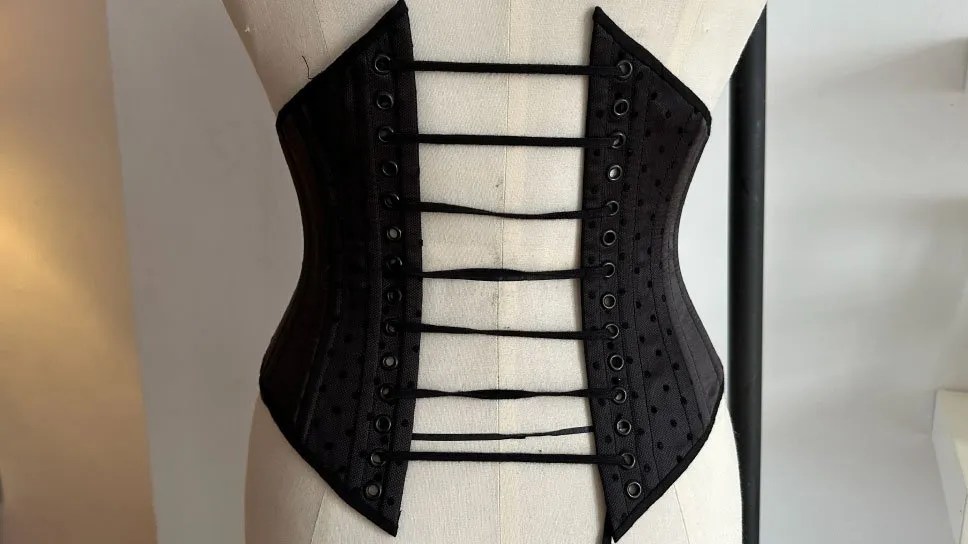
3. Ladder Lacing
- A decorative and historical lacing style
- Used in Renaissance and Victorian corsetry
- Less adjustable but visually striking
4. Spiral Lacing
- A traditional method used in historical corsets
- Laced in a continuous spiral, rather than criss-crossing
- Ideal for authentic period costumes
How to Lace a Corset: Step-by-Step Guide
1. Prepare Your Corset and Laces
- Use high-quality, non-stretch laces (such as flat or round corset laces)
- Ensure the corset is fully opened before lacing
- Find the centre of your laces to ensure equal length on both sides
2. Start from the Top
- Begin by threading the lace through the top two eyelets, pulling both ends evenly
- Continue lacing in your chosen style (criss-cross, ladder, or spiral)
3. Create the Waist Loops (For Bunny Ear Lacing)
- When you reach the waistline, form two loops ("bunny ears") by threading outward instead of inward
- These loops allow for easy self-tightening
4. Tighten Evenly
- Pull the laces from the top and bottom toward the waist
- Gradually tighten in small increments for an even cinch
- Ensure the corset sits comfortably without causing discomfort
5. Secure the Laces
- Tie the excess lace into a secure bow at the back or wrap around the waist.
- Avoid tying at the bottom, as this can create uneven pressure.
Make a corset, lace a corset!
Ready to try corset these corset lacing techniques for yourself? Our range of historically inspired corset sewing patterns is the perfect place to start!


Common lacing mistakes to avoid
- Over-tightening too quickly: This can cause discomfort and damage the corset
- Uneven lacing tension: Leads to wrinkles or gaps in the corset
- Tying the knot too low: Always tie at the waist for the best support
- Using stretchy or weak laces: Can result in loosening over time
Conclusion
Lacing a corset correctly is crucial for comfort, support, and longevity. Whether you prefer classic criss-cross lacing, practical bunny ear lacing, or decorative historical styles, taking the time to lace your corset properly ensures the best results. Experiment with different methods and find the one that suits your needs best!
Do you have a favourite corset lacing method? Share your thoughts in the comments below!